Where is D'Arcy Island?


D'Arcy Island is a small island to the southeast of James Island and Sidney Spit. Today it is an uninhabited island little more than a kilometre in width. It is also a provincial marine park, visited by the occasional kayaker or marine camper. Campers who stay on D'Arcy Island are often unaware they tread on unmarked graves...


From 1891 to 1924, D'Arcy Island was western Canada's only leper colony. Spring of 1891, the City of Victoria discovered five Chinese
men afflicted with leprosy living in a shack behind the Kwong Wo &
Co. store on Fisgard Street. Victoria city council quietly applied to the provincial
government for the acquisition of D'Arcy Island "for sanitary
purposes." trying to hide the outbreak of leprosy. The Daily Colonist reported on this saying "More repulsive
looking human beings would be hard to imagine. Each was a total
physical wreck, and their features were so distorted, disfigured and
swollen as to be almost out of human semblance".

The five men were terrified about being isolated from family and friends. One of the men, Ng Chung, attempted to slit his throat with a large carving knife to avoid being sent to the island. On the island, workers had built a one-storey dwelling it was
divided into six individual rooms with sparse furnishings and linen.

Fishing gear, gardening tools, and seeds were supplied. A supply ship was to deliver food, clothing, coffins and occasionally opium to the island every three months, along with a visiting doctor. Unfortunately, when weather was bad, the ship would miss its run and the inmates on the island would have to wait another three months for their supplies.
The men grew vegetables and raised ducks, geese and pigs in spite of their crippling disease.
Later when isolated cases of leprosy were found in Vancouver or in the interior, the patients were placed on D'Arcy Island. One man, a Chinese miner from Kamloops, was reportedly boxed up
in a crate and shipped from Vancouver - having already lost his toes,
the man was referred to as "a shocking sight."
The federal government made no attempt to improve the lot of the
lepers on D'Arcy Island even though the lepers in New Brunswick
(Tracadia) were well cared for by the Religious Hospitallers of Saint
Joseph of Montreal.
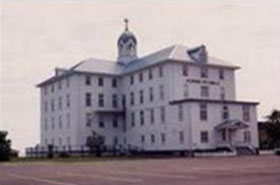
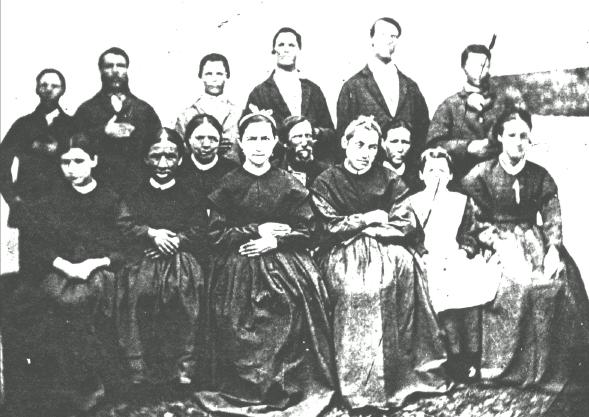
April 1896, Dr. Smith wrote to Ottawa recommending that the patients at D'Arcy be transferred to the leper hospital at Tracadie where they would receive much better medical care at a substantially lower cost, but his suggestion was ignored.
A Vancouver Province article suggested transferring the men to William Head Quarantine Station near Victoria, where they would feel more comfortable and less isolated from friends and family.
Reports by medical officers described conditions on the island as deplorable, yet nothing was done.
A missionary woman named Mrs. Hansel offered to reside on the island and care for the lepers in the summer of 1894 was rejected by the attorney general's office in a letter stating, "the devoted services which Mrs. Hansel is prepared to render might be applied to a cause still more in the interests and for the benefit of mankind... they [the lepers] have been well attended and it would seem that the misery of their lot can hardly be alleviated by placing a guardian among them."
Leprosy
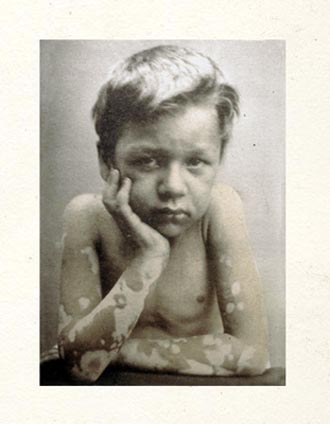
Leprosy, or Hansen's disease, is a disease that has been known since biblical times. It is caused by the bacterium Mycobacterium leprae.
It is not very contagious and it has a long time
before symptoms appear. Children are more likely than adults to get
the disease.
Leprosy
is common in many countries worldwide, and in temperate, tropical, and
subtropical climates. About 100 cases per year are diagnosed in the
United States. Most cases are in the South, California, Hawaii, and U.S.
islands.
Effective medications exist therefore isolating people with this disease in "leper colonies" is no longer needed.
Effective medications exist therefore isolating people with this disease in "leper colonies" is no longer needed.
Symptoms include: areas of the skin that are lighter than normal skin color, decreased sensation in these areas to touch, heat, or pain and they do not heal. There is muscle weakness and lack of feeling in the face, hands, arms, feet and legs. This lack of feeling can cause the patients to not notice things like injury or infection in the area. In the most severe forms of leprosy, the areas on the skin turn into lumps or deformed masses. Loss of fingers, toes, nose is not uncommon and permanent muscle weakness and nerve damage can happen if the patient is not treated. People
with long-term leprosy may lose the use of their hands or feet due to
repeated injury because they lack feeling in those areas.
Diagnosing
the disease early is important. Early treatment limits damage, prevents
a person from spreading the disease, and allows the person to have a
normal lifestyle.

No comments:
Post a Comment