Search This Blog

Wednesday, April 4, 2012

D'Arcy Island

Where is D'Arcy Island?


D'Arcy Island is a small island to the southeast of James Island and Sidney Spit.  Today it is an uninhabited island little more than a kilometre in width.  It is also a provincial marine park, visited by the occasional kayaker or marine camper.  Campers who stay on D'Arcy Island are often unaware they tread on unmarked graves...


From 1891 to 1924, D'Arcy Island was western Canada's only leper colony. Spring of 1891, the City of Victoria discovered five Chinese men afflicted with leprosy living in a shack behind the Kwong Wo & Co. store on Fisgard Street. Victoria city council quietly applied to the provincial government for the acquisition of D'Arcy Island "for sanitary purposes." trying to hide the outbreak of leprosy.  The Daily Colonist reported on this saying "More repulsive looking human beings would be hard to imagine. Each was a total physical wreck, and their features were so distorted, disfigured and swollen as to be almost out of human semblance". 

The five men were terrified about being isolated from family and friends.  One of the men, Ng Chung, attempted to slit his throat with a large carving knife to avoid being sent to the island. On the island, workers had built a one-storey dwelling it was divided into six individual rooms with sparse furnishings and linen. 


Fishing gear, gardening tools, and seeds were supplied.  A supply ship was to deliver food, clothing, coffins and occasionally opium to the island every three months, along with a visiting doctor. Unfortunately, when weather was bad, the ship would miss its run and the inmates on the island would have to wait another three months for their supplies.
The men grew vegetables and raised ducks, geese and pigs in spite of their crippling disease.
Later when isolated cases of leprosy were found in Vancouver or in the interior, the patients were placed on D'Arcy Island.  One man, a Chinese miner from Kamloops, was reportedly boxed up in a crate and shipped from Vancouver - having already lost his toes, the man was referred to as "a shocking sight."
The federal government made no attempt to improve the lot of the lepers on D'Arcy Island even though the lepers in New Brunswick (Tracadia) were well cared for by the Religious Hospitallers of Saint Joseph of Montreal.
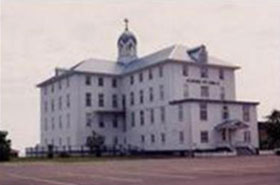

April 1896, Dr. Smith wrote to Ottawa recommending that the patients at D'Arcy be transferred to the leper hospital at Tracadie where they would receive much better medical care at a substantially lower cost, but his suggestion was ignored. 


A Vancouver Province article suggested transferring the men to William Head Quarantine Station near Victoria, where they would feel more comfortable and less isolated from friends and family. 
Reports by medical officers described conditions on the island as deplorable, yet nothing was done.


A missionary woman named Mrs. Hansel offered to reside on the island and care for the lepers in the summer of 1894 was rejected by the attorney general's office in a letter stating, "the devoted services which Mrs. Hansel is prepared to render might be applied to a cause still more in the interests and for the benefit of mankind... they [the lepers] have been well attended and it would seem that the misery of their lot can hardly be alleviated by placing a guardian among them."

Leprosy

Leprosy, or Hansen's disease, is a disease that has been known since biblical times. It is caused by the bacterium Mycobacterium leprae. It is not very contagious and it has a long time before symptoms appear. Children are more likely than adults to get the disease.
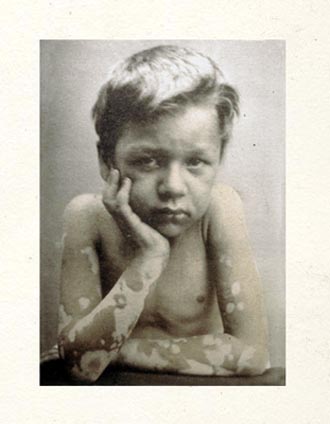

Leprosy is common in many countries worldwide, and in temperate, tropical, and subtropical climates. About 100 cases per year are diagnosed in the United States. Most cases are in the South, California, Hawaii, and U.S. islands.

Effective medications exist therefore isolating people with this disease in "leper colonies" is no longer needed.

Symptoms include: areas of the skin that are lighter than normal skin color, decreased sensation in these areas to touch, heat, or pain and they do not heal.  There is muscle weakness and lack of feeling in the face, hands, arms, feet and legs. This lack of feeling can cause the patients to not notice things like injury or infection in the area.  In the most severe forms of leprosy, the areas on the skin turn into lumps or deformed masses.  Loss of fingers, toes, nose is not uncommon and permanent muscle weakness and nerve damage can happen if the patient is not treated.  People with long-term leprosy may lose the use of their hands or feet due to repeated injury because they lack feeling in those areas.

Diagnosing the disease early is important. Early treatment limits damage, prevents a person from spreading the disease, and allows the person to have a normal lifestyle.


Tuesday, April 3, 2012

What Brought the Chinese to Canada?


Canadian Railroad Trilogy, ©1967 by Gordon Lightfoot  

There was a time in this fair land when the railroad did not run
When the wild majestic mountains stood alone against the sun
Long before the white man and long before the wheel
When the green dark forest was too silent to be real 
                                       
But time has no beginnings and the history has no bounds
As to this verdant country they came from all around
They sailed upon her waterways and they walked the forests tall
Built the mines, mills and the factories for the good of us all
                                       
And when the young man's fancy was turnin' to the spring
The railroad men grew restless for to hear the hammers ring
Their minds were overflowing with the visions of their day
And many a fortune lost and won and many a debt to pay
                                       
For they looked in the future and what did they see
They saw an iron road running from the sea to the sea
Bringing the goods to a young growing land
All up from the seaports and into their hands
                                       
Look away said they across this mighty land
From the eastern shore to the western strand
                                       
Bring in the workers and bring up the rails
We gotta lay down the tracks and tear up the trails
Open her heart let the life blood flow
Gotta get on our way 'cause we're moving too slow
                                       
Bring in the workers and bring up the rails
We're gonna lay down the tracks and tear up the trails
Open her heart let the life blood flow
Gotta get on our way 'cause we're moving too slow
Get on our way 'cause we're moving too slow
                                       
Behind the blue Rockies the sun is declining
The stars they come stealing at the close of the day
Across the wide prairie our loved ones lie sleeping
Beyond the dark ocean in a place far away 
                                       
We are the navvies who work upon the railway
Swinging our hammers in the bright blazing sun
Living on stew and drinking bad whiskey
Bending our backs til the long days are done
                                       
We are the navvies who work upon the railway
Swinging our hammers in the bright blazing sun
Laying down track and building the bridges
Bending our old backs til the railroad is done 
                                       
So over the mountains and over the plains
Into the muskeg and into the rain
Up the St. Lawrence all the way to Gaspe
Swinging our hammers and drawing our pay
Layin' 'em in and tying them down
Away to the bunkhouse and into the town
A dollar a day and a place for my head
A drink to the living, a toast to the dead
                                       
Oh the song of the future has been sung
All the battles have been won
On the mountain tops we stand
All the world at our command
We have opened up her soil
With our teardrops and our toil 
                                       
For there was a time in this fair land when the railroad did not run
When the wild majestic mountains stood alone against the sun
Long before the white man and long before the wheel
When the green dark forest was too silent to be real
And many are the dead men too silent to be real


The first wave of Chinese immigrants to arrive in Canada were motivated by various push and pull factors. Negative factors can "push" people to leave their home while positive influences "pull" people towards a particular country.

Push Factors

Guangzho is a port in the south of China near Hong Kong.
  1. Most Chinese immigrants to Canada in the last half of the 19th century came from one small area near the southern port of Guangzhou. Only half of the area had rich soil that was suitable for growing crops.
  2.  The population in the area was high and growing and the farmers couldn't grow enough crops to feed everyone.
  3. Available land was scarce and rents were high.  Also, the area was prone to natural disasters like floods and droughts.  This made it hard for the farmers to feed their families.
  4. The area lacked law and order.  The difficult conditions that people had just living caused a peasants' revolt in 1851. The Taiping Rebellion, which ended in 1864, claimed 20 million lives across the country and other peasant wars in southern China claimed 150,000 lives between 1854 and 1868.
  5. Farmers were drafted into armies, crops were ruined and bandit gangs raided villages. 
  6. British started exporting their goods into China through other ports than Guangzho and many of the dock workers lost their jobs.
Pull Factors
  1.  Gold!  Gold was discovered in several places in North America - California, the Fraser River, the Cariboo, and the Yukon.  Several thousand Chinese immigrants came to mine for gold, joining the thirty thousand other goldminers that came to BC.
  2. Some of the Chinese immigrants came to work in other jobs.  They were hired to build roads, clear land and construct railways. They also worked in coal mines and fish canneries and on farms.
  3.  Chinese men who came to Canada, did so with the intension of sending money back to their families in China.

Life for the Chinese in British Columbia

The first Chinese immigrants to North America went to California for the gold rush in the 1850s.  There, white miners robbed and murdered the Chinese goldminers to drive them from the goldfields. The Chinese traveled north to BC but because they were afraid of violence they did not compete directly with white miners. Instead, they reworked sites that white miners said were worthless. In these deserted claims, they found several dollars worth of gold each day.  By 1883 they made up 75% of gold miners and were instrumental in building the frontier economy.  They opened stores and restaurants in mining towns and started vegetable farms in and near the interior and coastal cities.  Chinese immigrants all over North America faced prejudice and discrimination because of their different dress, language, culture, religion, and race.


Newspaper article, "No Chinese Wanted Here," from the Whitehorse Star, June 28, 1902
Caricature, "The Heathen Chinee in British Columbia" from the Canadian Illustrated News, April 26, 1879


The Chinese Build the Railway


In 1871, BC joined Confederation and Prime Minister John A. Macdonald kept his promise of building a railway from coast to coast.  Once the construction of the railway began, Chinese immigrants came to work as "navvies".  Because the work was dangerous, the railway had a difficult time finding enough workers. Despite this between 1881 and 1884, as many as 17 000 Chinese men came to B.C. to work as labourers on the Canadian Pacific Railway.  

The Chinese workers worked for $1.00 a day, and from this $1.00 the workers had to still pay for their food and their camping and cooking gear. White workers did not have to pay for these things even though they were paid more money ($1.50-$2.50 per day). As well as being paid less, Chinese workers were given the most back-breaking and dangerous work to do - they cleared and graded the railway's roadbed and blasted tunnels through the rock. There were accidents, fires and disasters. Landslides and dynamite blasts killed many.  It is said that there was one dead Chinese worker for every mile of railroad track.  There was no proper medical care and many Chinese workers depended on herbal cures to help them. 

The Chinese railway workers lived in crowded camps, sleeping in tents or boxcars.  In the winter it was very cold and the open fires were the only way of keeping warm.  These conditions caused a great deal of illnesses - flu and colds, bronchitis and pneumonia, dysentary, tuberculosis, etc.. 

The Chinese workers mainly ate a diet of rice and dried salmon, washed down with tea. With their low salaries they could not afford fresh fruit and vegetables, so many of the men suffered from scurvy, a painful disease caused by a diet without vitamin C.  Scurvy starts with exhaustion, followed by formation of spots on the skin, spongy gums, and bleeding from the eyes, nose and gums. A person with scurvy looks pale, feels depressed, and is partially immobilized. As scurvy advances, there can be open wounds, loss of teeth, jaundice, fever and death.   

Once the railway was finished, these men were left with no work and not enough money to return to China.  


What Happened When the Railway was Finished?
Some opened restaurants, laundries, or cafes, others got jobs working on ranches or as cooks. No matter where they ended up, they faced discrimination. Many towns did not want Chinese workers to settle there and made life very difficult for them.


http://www.collectionscanada.gc.ca/canadiens-chinois/021022-1100-e.html

Friday, March 2, 2012

What Brought African-Americans to Canada?


  • During the nineteenth century (1800s) many African slaves from the United States ran to Canada and Mexico. 
  • Approximately 50,000 men, women and children ran away each year but only a few thousand made it to freedom.
  • For most escaped slaves the goal was permanent freedom. 
  • Slavery was a system that brutalized and exploited the Africans and their descendants that ended up living on plantations in the US.  
  • The run for freedom often meant leaving loved ones behind in slavery.
  • Slaves who were caught were returned to bondage - even when they got away, runaways did not have any right to freedom. The law protected the rights of slaveholders to retrieve their "property."
  • Most runaways were young men in their teens and twenties because they had not yet married or had not yet begun a family.  
  • Women had often begun to raise families by their late teens and early twenties which made it harder to get away or evade capture.  Still, many women embarked on the migration to freedom.
  • Runaways showed great strength of character - courage, ingenuity and organizational skills.
  • They had to change their appearance - clothing, hair, and sometimes even gender. 
  • Most runaways chose one of the five places to run to: towns and cities in the South, remote areas near the plantations, the West, the Northern US, Mexico, Central America, the Caribbean and Canada.
  • In 1772, England declared that any slave reaching Canadian soil was automatically free so after the War of 1812 many runaways started to settle in Canada. People began to call it the "Promised Land." 


  • Over the next thirty years, between one and two thousand African Americans entered Canada each year.
  • By the start of the American Civil War which ended slavery in the US about thirty thousand fugitives lived in Canada.


SYMBOLS OF THE UNDERGROUND RAILROAD

Those helping the runaways used symbols to show them the safest way to run.  Some of the symbols could be found in the patterns in quilts.  Each of the quilt patterns gave a different message to the runaways.
Another way that runaways were given messages was through songs - specifically "spirituals" as the slave songs came to be known.


Today, you can choose one of two tasks:

  • Create a (paper) quilt that gives a secret message.  Write a description of what message you are trying to pass along to the runaways.
  • Create a music poster with the lyrics of one of the songs.  Illustrate the poster with pictures that show what message the song is giving the runaways.
These are due at the end of the block.


Go to this link and follow the journey of the Underground Railroad:


Thursday, March 1, 2012

What Brought the Irish to Canada?

How Many Irish and Irish Descendants Live in Canada Now?

Guess!


The 2006 census by Statscan, Canada's Official Statistical office revealed that the Irish were the 4th largest ethnic group with 4,354,155 Canadians with full or partial Irish descent or 14% of the nation's total population. This may understate the Irish contribution to Canada's population, as those responding "Canadian" in census surveys are thought to be largely of British or Irish descent.

How did we end up with so many Irish and Irish descendants in Canada?


The reasons for the Irish coming to Canada in the 1800's are complicated and multi-layered.  Think about the Irish like this.  The Irish were the original inhabitants of Ireland.  They spoke Irish.


and they were Celts and followed the Celtic religion until 
they were converted to Catholicism.  The Irish are the 
indigenous people of Ireland.  Just as the British 
colonized North America, India, Australia and so many 
other countries, they colonized Ireland.  


The British took lands from the Irish farmers and forced 
them to pay high rents.  They bought their crops, as 
much as the farmers could grow in the poor soil in 
Ireland, for an undervalued price.  As a result, the 
farmers made only a subsistent living - barely making 
enough to feed themselves and certainly not to set any 
money aside.


From Potato to...


Potato Blight

In 1846, the potatoes in Ireland were hit with Phytophthora infestans or potato blight.   With farmers making only a subsistence living at the best of times, and having no money to buy extra food due to the high rents and low prices available for their crops, the potato blight caused almost immediate famine all over Ireland.

Out of desperation, those that were able fled Ireland.  Between 200,000 and 300,000 crossed the Irish Sea to England.  Ships took others to Canada, the US and to Australia.  Ships full of food sailed from North America to help fight the famine and to bring back the impoverished immigrants.  The starving and weakened Irish filled the "Coffin Ships" to face conditions just as bad as they had in Ireland.


"These ships, crowded and disease ridden, with poor access to food and water, resulted in the deaths of many people as they crossed the Atlantic, and led to the Typhus epidemic of 1847 at quarantine stations in Canada. Owners of coffin ships provided as little food, water, and living space as was legally possible – if they obeyed the law at all.
While coffin ships were the cheapest way to cross the Atlantic, mortality rates of 30% aboard the coffin ships were common. It was said that sharks could be seen following the ships, because so many bodies were thrown overboard."  Coffin Ships


When the Coffin Ships landed, the Irish were enclosed in quarantine shed in Grosse Isles, Montreal, Kingston, Toronto, and St. John. Many of the Irish suffered from typhus which is a disease carried by the lice found on rats.  Within ten days of being bitten by a louse, they would start to show symptoms of high fever, pain in muscles and joints, cerebral disorders, and headache. By the fifth day, a dark-red rash with elevated spots would appear on the trunk and shoulders, spreading to the rest of the body. Delirium would often set in by the second week. If the patients survived to the third week, they would often recover but would soon have a relapse with high fever, from which they would recover very quickly. The death rate was often as high as 50-70 percent of those infected.  Because so many people died, hundreds of children arrived as orphans.  These children were often taken in by Quebecois, Newfoundlander, New Brunswick and Ontario families, either as adopted children or as workers on the farms.

Officials in Boston and New York began to turn away the ships due to the illness and poor condition of the Irish on board.  These ships, thus turned back, made their way to Quebec and New Brunswick, greatly increasing the numbers of Irish immigrants arriving on Canadian shores.

Montreal's mass graves

The quarantine station at Grosse Isle, Newfoundland, Canada, was soon overwhelmed with the numbers of sick passengers crawling or carried off the coffin ships. It couldn't treat those that were ill, let alone provide for those that were not. So those that appeared healthy remained onboard their immigration ships and were simply waved on to Montreal. Unfortunately, many had already caught typhus – the fever that ran rampant on their overcrowded and dirty vessels – and they were to become ill further upriver. Soon, it was Montreal that was overwhelmed with the dead and dying.

Ten years after the year of the coffin ships, workers building the city's Victoria Bridge unearthed a mass grave containing the remains of about 6000 Irish immigrants. A 27-tonne granite boulder marks the spot beside the bridge's entrance where an annual ceremony remembers those who died escaping poverty and hunger.

British Agricultural Revolution


British Agricultural Revolution
  • took place in the late 18th and early 19th centuries
  • changes in agricultural practices resulted in tremendous increase in productivity
  • the agricultural revolution resulted in growth of population and freeing up the labour force
  • there were four main changes in agricultural practices: enclosure, mechanization, four field crop rotation, and selective breeding

Enclosure
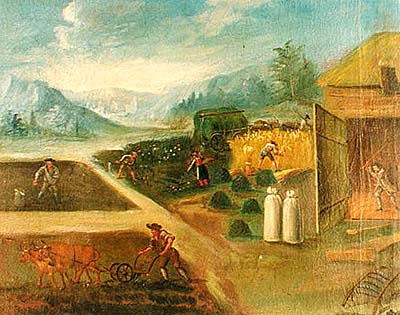
  • prior to the 18th century, farmers used the open-field system.  
  • farmers subsistence-cropped on strips of land in 3 or four large fields held by the feudal land owner.
  • these peasant farmers used common land to graze livestock
  • enclosure farming enclosed fields for common use - this made farming more efficient but took the common areas away from the peasants
  • When the small scale farmers had to pay for their land to be resurveyed they often couldn't afford the costs and were forced to sell their land, often for much less than it was worth.

Mechanization
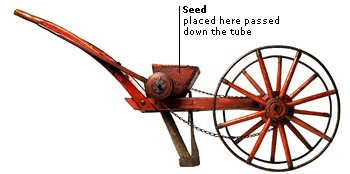
  • certain inventions made a huge difference to the efficiency of farming - these inventions included Jethro Tull's seed drill, the Rotherham iron plough and the Scot's iron plough, and Andrew Meikle's threshing machine.

Crop Rotation
  • initially this was a three field rotation - two fields were planted with different crops (i.e. wheat and barley) and the third was left fallow, or empty, allowing the third field to replace minerals and nutrients that had been taken by the crops previously planted
  • later, it was discovered that growing legumes in the fallow field helped to restore nitrogen
  • eventually it was discovered that a four field rotation was more efficient than a three field system
  • because the fields had better nutrients the crops were better
  • this improved the diet of both people and livestock
  • more and better livestock were kept which meant better and more manure which helped to grow better crops

Selective Breeding
  • by breeding animals that had desirable qualities, quality of livestock began to improve

Effects on History
  • this was a major turning point in history
  • the increase of the population of Great Britain was able to be sustained due to better farming techniques and increased production of crops
  • early in the agricultural revolution a new class of landless labourers developed leading to a growth in the cottage industries
  • women had worked side by side with their farmer husbands, however the new iron ploughs were too heavy and women were relegated to other work, often taking part in cottage industries to supplement the farming income
  • other women were forced into domestic services or prostitution

A Question of Loyalties

CANADA: A PEOPLE’S HISTORY
A QUESTION OF LOYALTIES


As you watch the film answer these questions.  Since there are quite a few questions, you may want to work with a partner and divide the questions between you.

1.     What does it mean when the narrator says that the Americans were at war with themselves?  The rebel Americans were attacking the Loyalists.
2.     Why did the rebels approach Quebec?  What was the response? They were sent an open letter "asking" them to join the American rebels.  Part of the the request was a veiled threat.  While there were some of the French who secretly hoped the rebels would over-throw the British, most felt that it was just infighting within the British 13 colonies.
3.     What does the expression “the shot heard ‘round the world” mean? This marked the beginning of the Revolutionary War.
4.     How did most Canadians view the war between the British and the American rebels and how did the Canadians’ response to the call to arms reflect this? See the answer to question 2.  The call to arms fell mainly on deaf ears.  The British forces had difficulty getting any of the French Canadians to sign up to fight the rebels. 
5.     What was the American plan to invade Canada? One garrison of rebels would head north towards Montreal and the other garrison would loop to the East and come down the St. Lawrence to Quebec.
6.     Describe what happened at Fort St. Jean.  What city was left unprotected? The British in Fort St. Jean stood against the rebel forces, however they were greatly outnumbered.  Eventually they had to surrender.  This left Montreal unprotected and the rebels marched into Montreal as soon as Fort St. Jean had fallen.
7.     What factors make the defense of Quebec City “doubtful”? The British continued to have difficulties in getting the French Canadians join the British forces.  In addition, there was one group of rebels marching toward them from Montreal and another coming down the St. Lawrence.
8.     What allowed Carleton to save Quebec City? Carleton threatened to evict any man - French or otherwise - from Quebec City if they refused to join the British forces.  Also, a rebel deserter came to the British and told them that the rebel forces planned to attack on the first snowy night.  This occurred on New Years Eve.  Because of the snow, when the rebels coming from Montreal attacked, they didn't see the British waiting for them and their leaders were all slaughtered.  This allowed the British to corner the other rebels and eventually the rebels surrendered.
9.     Who were the Loyalists?  What happened to them? The Loyalists were members of the 13 colonies (Americans) who were still loyal to the British crown.  The rebels took all their supplies and put their men in prison, leaving the women and children to freeze and starve in the winter.
10.  Who were Butler’s Rangers? These were Loyalists who joined with the British to make a crack fighting team to help to try to defeat the rebels. How did the Revolutionary War become a civil war? The rebels turned on the Loyalists even though both groups were Americans.
11.  Who was Joseph Brant?  Also known as Thayendanegea, he was a military and political leader of the Mohawks.  What message did he take to King George?  He promised George III that the six Iroquois nations would fight on the side of the British if the British would protect Iroquoian land.  What message does he take back to Canada? George III agreed to Brant's proposal.
12. What response do the Iroquois have to Joseph Brant’s deal? Three of the nations side with the British but the other three side with the rebels.
13.  What were George Washington’s orders in regards to the Iroquois?  He ordered the rebels to burn the Iroquoian villages.  What were the results of these orders? All the Iroquois nations had to flee north into Canada.
14. Other than the Loyalists and the Six Nations, which other group migrated to Canada? African Americans.
15. What impact did the Loyalists have on Nova Scotia?  So many Loyalists came to Nova Scotia from New York that they quadrupled the population.  What conditions did they live under that first winter? Many spent the winter in tents.  Food was scarce.
16. What difficulties did the black Loyalists face in their new home? They had difficulties finding work as the white Canadians felt that jobs should not be given to the black Loyalists over the whites.  In spite of this, most stayed and settled and tried their hand at farming.
17. What part of Canada was the “upper country”? Ontario Who settled it? Butler's Rangers moved into the rougher parts of the "upper country".
18. Who was forgotten in the treaty between the British and the Americans?  Why was this the case? The Iroquois nations were not remembered in that their territories were not protected.  The British tried to include protections for them in the treaty with the Americans, but the Americans refused to include it.
19.  The Loyalists petition Britain to create new colonies.  What are these colonies? Upper Canada and New Brunswick. Why did the British agree? They were afraid of tension between the Loyalists and the French.
20. Who were the new settlers into Upper Canada? Some British but also many Americans that were not Loyalists came for the chance of free land.

Loyalists

Many of the Loyalists who went to Quebec travelled by land.  This map shows the major routes they used.  Most of them arrived between 1776 & 1785.  The Loyalists who went to Nova Scotia travelled by sea.

 
The Loyalists

BACKGROUND:
 
The Loyalists were the people living in the Thirteen Colonies who remained loyal to Britain during the American Revolution (1775-1783).  Many of their families had lived in the colonies for generations, while others were relatively recent immigrants from England or other European countries.  During and after the Revolutionary War, they left the United States rather than become American citizens.  Thousands of them chose to settle in Canada.

Many families were harassed, driven from their homes, fined, jailed and some were even killed since they were viewed as traitors by the American rebels.  They fled the Thirteen Colonies to find safety and a new life in other British Territories.  Other Loyalists were influenced to come to British North America (Canada) by the offer of free land for new farms.
The Loyalists came from many different backgrounds.  There were poor and rich Loyalists, and people from towns as well as rural areas.  Businessmen, farmers, soldiers, escaped slave and slave owners; men, women, and children left in large numbers.  Many of them had British ancestry and were loyal to the king.  But some people  from other cultures feared that if they stayed in the United States they would be forced to give up their religions and customs - they thought that the British Government would be more inclined to protect their way of life.  Some of these were First Nations who had fought as Loyalists alongside the British troops.  They feared that American settlers would take over their lands.  When the British lost the war in the Thirteen Colonies, many of the Six Nations of the Iroquois Confederacy moved into Canada for British protection and lands.

LOYALISTS IN CANADA

Two main groups of Loyalists came to Canada: the first waves came during the actual fighting of the American Revolution, followed by a later wave that fled north after the British lost the Revolutionary War.  At first, most settled in the Maritime region, Quebec City, and Montreal.  In total, more than 30,000 Loyalist refugees arrived in Nova Scotia in the early 1780s resulting in the formation of a new colony, New Brunswick, in 1784.   The Loyalists quickly became the majority of the population in the Maritime region, and their needs and political demands overshadowed those of the original inhabitants.

The governor of Quebec at the time feared that if large numbers of English-speaking Protestants (the Loyalists) settled amongst the French-speaking Catholics of the colony of Quebec, trouble would follow.  The Loyalist refugees were therefore encouraged to head further west into the then-unsettled regions near Lakes Ontario and Erie.  Some continued to settle in the Eastern townships of Quebec and around Montreal and Quebec City, but most took up the offer of large tracts of free land "out west".  By 1784 at least  5000 had travelled to the western region.  The population grew rapidly and in 1791 two colonies were created.  Lower Canada (what is now Quebec) was predominantly populated with French-speaking Catholics.  Upper Canada (now Ontario) was created to better represent the needs of its mainly English-speaking inhabitants.  Almost 2000 Six Nations refugees also settled near the Great Lakes.

To encourage the Loyalists to open new areas of settlement, the government offered each family or individual a piece of land (approximately 80 hectares) and farming supplies to start their new life in British North America.

THE LOYALIST LEGACY

It is not known exactly how many Loyalists came to Canada but the best estimates suggest that about 40,000 people came north in the 1770s and 1780s.  New colonies and governments were created as a result of their arrival.  The settlers in rural areas cleared the lands and established farms and towns that later grew into large cities in a relatively short time.  New businesses spring up and the trades and industries flourished, attracting  even more settlers.  The British systems of individual land ownership and grid surveys were introduced to give registered title to the farmlands settled by the Loyalists.

The Loyalists and their descendants also changed the ethnic makeup of Canada.  Before their arrival, the population had been mainly French-speaking Catholics.  They brought with them traditional British values on politics, religion, education, and the structure of society - some of these values would pave the way for conflict between the French and the English for many years to follow.  The leaders at the time also believed that the Loyalists would help protect the British colonies from any future threats of American invasion or expansion.


Sources: The Canadian Encyclopedia & Canada Revisited (1992)


Let's play Loyalist Jeopardy!


For Homework answer these questions.  
Questions:
1.  Who were the Loyalists?
2. Why did they leave the Thirteen Colonies?
3. Give two reasons why some of the non-British people decided to leave?
4. Name the two regions of Canada where most of the Loyalists settled.
5. What were the Loyalists promised by the government?
6. What new colonies were created as a result of the Loyalist migration?
7. How many Loyalists in total came to Canada?
8. Name at least five results of the Loyalists settling in Canada.


Bonus Question - Answer this question for extra marks!
9. Now that you know the results of the Loyalist immigration into Canada, write a paragraph describing what you think Canada might be like in 200 years from now, taking into consideration the immigration to Canada we see today.