Search This Blog

Sunday, April 22, 2012

Rebellions in Upper and Lower Canada

After reading these notes, create a Venn diagram comparing and contrasting the rebellions in Upper and Lower Canada.  Consider the following: problems that led up to the rebellions, the leaders of the rebellions and what they did, the rebellions themselves, and the outcome of the rebellions.  

Political Problems in Upper Canada

  • settlers were unhappy about land distribution - particularly about the clergy & crown reserves and the land speculators that were part of the Family Compact. and absentee landlords that overpriced and tied up prime land.
  • the settlers were also unhappy that the building of roadways was hindered by the clergy and crown reserves.
  • William Lyon Mackenzie was a radical reformer with strong political convictions.
  • He bought a newspaper called The Colonial Advocate in which he published articles that were very critical of the government and the Family Compact.
  • His newspaper office was ransacked by members of the Family Compact so Mackenzie sued them which put him at the centre of a group of people who wanted a radical change in government.
  • Mackenzie was elected a member of the Legislative Assembly in 1828 and became a leader of the reform movement.
Political Problems in Lower Canada

  • Problems in Lower Canada were in some ways more serious than in Upper Canada.
  • French population had not adjusted to the British conquest.
  • British rule was lacking democracy which was hard to accept by the French Canadians especially since they had been exposed to the ideas of the French and American Revolutions.
  • Lower Canada was also controlled by an oligarchy - the Chateau Clique - made up of merchants and ex-army officers, mainly English speaking.
  • The only reason the Chateau Clique maintained ties with the Catholic Church and some of the wealthy French Canadian landowners was for profit.
  • The land problems that Upper Canada experienced were unknown under the seigneurial system.
  • Other problems, however, were very serious for the French Canadians
  • English had most of the advantages even though they were a smaller part of the population of Lower Canada.
  • French Canadians believed the Church and the seigneurs had "sold out" to the British.
  • English had become the official language which felt like an attack on French society and culture.
  • French Canadians were afraid the British would bring more English-speaking immigrants to Lower Canada to solve the "French problem".
  • The seigneurial system, the system the French Canadians were used to and had been brought to New France (Lower Canada) by the French settlers, was slowly changing.
  • The government was changing the old seigneurial system by offering land to people from the British Isles to create a British "free-hold" system.
  • When the Irish immigrants, fleeing the potato famine, arrived in Quebec, many were sick with cholera and the French Canadians believed that the British had plans to kill off the French population.
  • They felt discriminated against because of their language, culture and ideas.
  • French Canadian farmers resented the increase in land taxes while there were no taxes on business revenues.
  • The French Canadians felt ignored - every time they tried to address these inequalities with the government, the issues were passed over.
  • Louis-Joseph Papineau, a powerful public speaker, became the leader of the reform movement in Lower Canada.
  • Not all the reformers were French - Wolfred Nelson, and English physician was a strong supporter of reform as was Edmund O'Callaghan who was Irish and started up the pro-Patriote (pro-reform) newspaper The Vindicator.
  • Britain fueled the flames by appointing an anti-French governor, James Craig, who arrested anyone who criticized the government, brought in soldiers to intimidate the French-Canadians, and closed the reformist newspaper, the Canadien.  
  • All of this caused the French Canadians to become more and more bitter and angry with the government.
  • In 1832, British soldiers shot anti-government protesters in Montreal.
  • Louis-Joseph Papineau along with other reformers submitted the "Ninety-two Resolutions" to the governor - these resolutions demanded a complete change in the Lower Canada government.
  • Britain responded by replying with the "Ten Resolutions" which denied the rights of the elected Assembly. 
  • This led Papineau to openly rebel against the government.
The Rebellions of 1837

Lower Canada
  • The reformers of Upper and Lower Canada kept in contact with each other - they discussed common problems and possible solutions.
  • Both sets of reformers realized that reform in one colony would affect the other and that reform from within would not work.
  • Both Mackenzie and Papineau agreed the best move would be to make armed attacks on the government.
  • By revolting in both Upper and Lower Canada, Britain would not have enough troops to deal with both.
  • Unfortunately the revolts were not well coordinated.  
  • The Fils de la Liberte led the rebellion in Lower Canada after the attempted arrest of Papineau.
  • If they had been supported by the Catholic Church, they might have been successful but the Church urged the French Canadians to stay loyal to Britain.
  • By December 1837 most rebels had been killed, wounded, or arrested.
  • Papineau escaped to the US.
  • The resentment against the British/English-speaking Canadians has remained until today.
Upper Canada
 
  • Mackenzie and his followers in Upper Canada wanted to implement American style reforms.
  •  This distanced the reformers from many of the British settlers who still thought of the US as the enemy.
  • Many people, however, recognized the need for a new style of government.
  • Britain appointed the pro-Family Compact aristocrat, Sir Francis Bond Head, as governor.
  • As with Lower Canada, this created tension and resentment amongst the people of Upper Canada.
  • His style of ruling was heavy-handed and was reprimanded by the elected Assembly - his response was to dissolve the Assembly.
  • Mackenzie and the radical leaders made plans that were treasonous.
  • Mackenzie organized the resistance and trained the rebels to fight.
  • Very few of the rebels, including Mackenzie, had actual military experience.
  • The lack of military experience and poor planning would eventually lead to the defeat of the rebels.
  • Mackenzie planned to set up a new and independent government if the demands of the rebels were not met.
  • Not all of the radicals were willing to follow Mackenzie, however he decided to go ahead with his plans of rebellion.
  • His attempts to attack were quickly put down by the militia and Mackenzie escaped to the US dressed as a woman.
  • Other leaders of both rebellions were either hanged or transported to Bermuda to be used as slave labour on plantations or government projects. 

        Family Compact vs Chateau Clique

        Family Compact


        Bishop Strachan

        • Upper Canada
        • Wealthy, Anglican, conservative elite.
        • An exclusive closed oligarchy of landowners, administrators, churchmen and businessmen who monopolized public office and controlled the economy of Upper Canada in the 1820s and 1830s.
        • The most important and influential member was Bishop John Strachan.
        • The members of the Family Compact made a great deal of money on land speculation, and canal building.
        • They used their influence to get the government to financially support the building of canals.
        • Fiercest opponent of the Family Compact was William Lyon Mackenzie. 
        Chateau Clique

        • Lower Canada
        • Group of wealthy families, mostly British aristocracy or French Canadian seigneurs
        • This included John Molson, founder of Molson’s Brewery and James McGill founder of McGill University
        • Known on the electoral scene as Parti Bureaucrate or Bureaucratic Party
        • Generally they wanted the French Canadian majority to assimilate into British culture
        • This included abolition of the seigneurial system, replacing French civil law with British common law, and replacing the Catholic Church with the Anglican Church.
        • Fiercest opponent of the Chateau Clique was Louis-Joseph Papineau.
         

        Thursday, April 5, 2012

        Trouble Stirring in Upper and Lower Canada


        It is 1828.  You are a Loyalist farmer in Upper Canada.  What do you think of this?

        Your government is strongly influenced by the members of the Family Compact - a group of wealthy, Anglican, conservative elite.  In fact, you could call them an oligarchy.  They hold most of the positions in public office and they control the economy.  They buy up the land and hold on to big chunks of it to bring up the prices.  They push the governor to build canals so they can ship their goods to sell.  Even though the government makes laws to help their citizens, the governor vetoes them if the laws don't help the Family Compact.


        It is still 1828.  You are a French-Canadian small merchant in Lower Canada.  What do you think of this?


        Your government is strongly influenced by members of the Chateau Clique. The Chateau Clique, also an oligarchy, is made up of wealthy English merchants and ex-army officers.  They do have some connections to the Catholic Church and a few wealthy French-Canadian landowners but only so they can make a profit.   The Chateau Clique makes sure that the English in Lower Canada have most of the advantages even though there are only 80,000 English and there are 360,000 French.  One of their purposes is to get the French-Canadians to be assimilated into British culture which means, among other things, to replace French civil law with British common law and to replace the Catholic Church with the Anglican Church.


        Do you want to change this?  With a partner, make a plan to bring changes to your part of Canada.  What would you do?


        Your plan is due at the end of the block.

        Important Vocabulary to Know


        Vocabulary you must know:

        1. Representative government – A representative government is one in which representatives are elected by people to make laws on their behalf.
        2. responsible government – responsible government can be voted out if elected representative fail to please a majority of the people who elected them.
        3. oligarchy – power is placed in the hands of a small group of rich and influential men
        4. democracy – these governments are representative and responsible
        5. Constitutional Act – A law that separated Upper Canada from Lower Canada and established an elected law-making assembly, a governor and two appointed councils  (1791)
        6. veto – To stop something with authority i.e. to veto a law is to cancel the law without having to confer with anyone
        7. Family Compact – Small group of rich business people in Upper Canada – the Council was made up of members of the Family Compact.
        8. Chateau Clique – Same as the Family Compact but in Lower Canada.
        9. Legislative Assembly – An elected law-making body of men
        10. governor – The head of the government in the Canadian colonies appointed by the British Crown.
        11. appointed – Selected by a higher authority.
        12. elected – Voted in by the majority of the voting public.

        Wednesday, April 4, 2012

        Immigration Project

        Immigration Project


        You will each do one of the following topics as your Immigration Project.  These are due Monday, April 23rd. 


        1. Write a story about someone's immigration to Canada.  This can be "made up" but must reflect the realities of how people like your main character came to Canada.  Because we have studied the Loyalists, the African-American runaways, the Irish, and the Chinese, it would be easiest to right a story about one of these groups.  If you have good information, however, about another group of people that emigrated to Canada then I would accept that.  You must include the reasons why this person left his/her home country, the journey here, what it was like to arrive in Canada and what life was like once they were here.  How did racism affect them?  Where did they settle?  What kind of work did they end up doing?  You may illustrate this but you do not have to.  This should be at least 3 typed pages.
        2. Create a comic book about someone's immigration to Canada. This can be "made up" but must reflect the realities of how people like your main character came to Canada.  Because we have studied the Loyalists, the African-American runaways, the Irish, and the Chinese, it would be easiest to right a story about one of these groups.  If you have good information, however, about another group of people that emigrated to Canada then I would accept that.  You must include the reasons why this person left his/her home country, the journey here, what it was like to arrive in Canada and what life was like once they were here.  How did racism affect them?  Where did they settle?  What kind of work did they end up doing? This should be at least 3 pages.
        3.  Write a report on the serious diseases from which many immigrants suffered: typhus, scurvy, tuberculosis, leprosy.  What are the symptoms?  How did immigrants and Canadians catch these diseases and how did they spread?  How did these diseases change the lives of the immigrants and people already in Canada?  How did Canadians deal with the issues of disease?  Was racism involve in their treatment in any way?  What do you think about this?  Would you have done anything differently? This should be at least 3 typed pages.
        4.  
           
           
          We will be working on these projects in class and they will be due Monday April 23rd.

        D'Arcy Island

        Where is D'Arcy Island?


        D'Arcy Island is a small island to the southeast of James Island and Sidney Spit.  Today it is an uninhabited island little more than a kilometre in width.  It is also a provincial marine park, visited by the occasional kayaker or marine camper.  Campers who stay on D'Arcy Island are often unaware they tread on unmarked graves...


        From 1891 to 1924, D'Arcy Island was western Canada's only leper colony. Spring of 1891, the City of Victoria discovered five Chinese men afflicted with leprosy living in a shack behind the Kwong Wo & Co. store on Fisgard Street. Victoria city council quietly applied to the provincial government for the acquisition of D'Arcy Island "for sanitary purposes." trying to hide the outbreak of leprosy.  The Daily Colonist reported on this saying "More repulsive looking human beings would be hard to imagine. Each was a total physical wreck, and their features were so distorted, disfigured and swollen as to be almost out of human semblance". 

        The five men were terrified about being isolated from family and friends.  One of the men, Ng Chung, attempted to slit his throat with a large carving knife to avoid being sent to the island. On the island, workers had built a one-storey dwelling it was divided into six individual rooms with sparse furnishings and linen. 


        Fishing gear, gardening tools, and seeds were supplied.  A supply ship was to deliver food, clothing, coffins and occasionally opium to the island every three months, along with a visiting doctor. Unfortunately, when weather was bad, the ship would miss its run and the inmates on the island would have to wait another three months for their supplies.
        The men grew vegetables and raised ducks, geese and pigs in spite of their crippling disease.
        Later when isolated cases of leprosy were found in Vancouver or in the interior, the patients were placed on D'Arcy Island.  One man, a Chinese miner from Kamloops, was reportedly boxed up in a crate and shipped from Vancouver - having already lost his toes, the man was referred to as "a shocking sight."
        The federal government made no attempt to improve the lot of the lepers on D'Arcy Island even though the lepers in New Brunswick (Tracadia) were well cared for by the Religious Hospitallers of Saint Joseph of Montreal.


        April 1896, Dr. Smith wrote to Ottawa recommending that the patients at D'Arcy be transferred to the leper hospital at Tracadie where they would receive much better medical care at a substantially lower cost, but his suggestion was ignored. 


        A Vancouver Province article suggested transferring the men to William Head Quarantine Station near Victoria, where they would feel more comfortable and less isolated from friends and family. 
        Reports by medical officers described conditions on the island as deplorable, yet nothing was done.


        A missionary woman named Mrs. Hansel offered to reside on the island and care for the lepers in the summer of 1894 was rejected by the attorney general's office in a letter stating, "the devoted services which Mrs. Hansel is prepared to render might be applied to a cause still more in the interests and for the benefit of mankind... they [the lepers] have been well attended and it would seem that the misery of their lot can hardly be alleviated by placing a guardian among them."

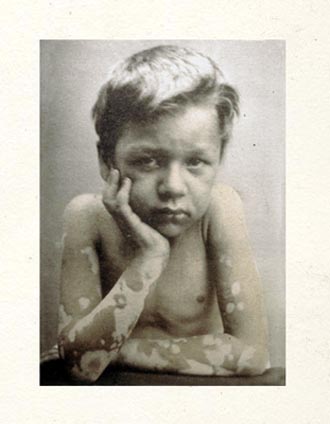
        Leprosy

        Leprosy, or Hansen's disease, is a disease that has been known since biblical times. It is caused by the bacterium Mycobacterium leprae. It is not very contagious and it has a long time before symptoms appear. Children are more likely than adults to get the disease.


        Leprosy is common in many countries worldwide, and in temperate, tropical, and subtropical climates. About 100 cases per year are diagnosed in the United States. Most cases are in the South, California, Hawaii, and U.S. islands.

        Effective medications exist therefore isolating people with this disease in "leper colonies" is no longer needed.

        Symptoms include: areas of the skin that are lighter than normal skin color, decreased sensation in these areas to touch, heat, or pain and they do not heal.  There is muscle weakness and lack of feeling in the face, hands, arms, feet and legs. This lack of feeling can cause the patients to not notice things like injury or infection in the area.  In the most severe forms of leprosy, the areas on the skin turn into lumps or deformed masses.  Loss of fingers, toes, nose is not uncommon and permanent muscle weakness and nerve damage can happen if the patient is not treated.  People with long-term leprosy may lose the use of their hands or feet due to repeated injury because they lack feeling in those areas.

        Diagnosing the disease early is important. Early treatment limits damage, prevents a person from spreading the disease, and allows the person to have a normal lifestyle.


        Tuesday, April 3, 2012

        What Brought the Chinese to Canada?


        Canadian Railroad Trilogy, ©1967 by Gordon Lightfoot  
        
        There was a time in this fair land when the railroad did not run
        When the wild majestic mountains stood alone against the sun
        Long before the white man and long before the wheel
        When the green dark forest was too silent to be real 
                                               
        But time has no beginnings and the history has no bounds
        As to this verdant country they came from all around
        They sailed upon her waterways and they walked the forests tall
        Built the mines, mills and the factories for the good of us all
                                               
        And when the young man's fancy was turnin' to the spring
        The railroad men grew restless for to hear the hammers ring
        Their minds were overflowing with the visions of their day
        And many a fortune lost and won and many a debt to pay
                                               
        For they looked in the future and what did they see
        They saw an iron road running from the sea to the sea
        Bringing the goods to a young growing land
        All up from the seaports and into their hands
                                               
        Look away said they across this mighty land
        From the eastern shore to the western strand
                                               
        Bring in the workers and bring up the rails
        We gotta lay down the tracks and tear up the trails
        Open her heart let the life blood flow
        Gotta get on our way 'cause we're moving too slow
                                               
        Bring in the workers and bring up the rails
        We're gonna lay down the tracks and tear up the trails
        Open her heart let the life blood flow
        Gotta get on our way 'cause we're moving too slow
        Get on our way 'cause we're moving too slow
                                               
        Behind the blue Rockies the sun is declining
        The stars they come stealing at the close of the day
        Across the wide prairie our loved ones lie sleeping
        Beyond the dark ocean in a place far away 
                                               
        We are the navvies who work upon the railway
        Swinging our hammers in the bright blazing sun
        Living on stew and drinking bad whiskey
        Bending our backs til the long days are done
                                               
        We are the navvies who work upon the railway
        Swinging our hammers in the bright blazing sun
        Laying down track and building the bridges
        Bending our old backs til the railroad is done 
                                               
        So over the mountains and over the plains
        Into the muskeg and into the rain
        Up the St. Lawrence all the way to Gaspe
        Swinging our hammers and drawing our pay
        Layin' 'em in and tying them down
        Away to the bunkhouse and into the town
        A dollar a day and a place for my head
        A drink to the living, a toast to the dead
                                               
        Oh the song of the future has been sung
        All the battles have been won
        On the mountain tops we stand
        All the world at our command
        We have opened up her soil
        With our teardrops and our toil 
                                               
        For there was a time in this fair land when the railroad did not run
        When the wild majestic mountains stood alone against the sun
        Long before the white man and long before the wheel
        When the green dark forest was too silent to be real
        When the green dark forest was too silent to be real
        And many are the dead men too silent to be real


        The first wave of Chinese immigrants to arrive in Canada were motivated by various push and pull factors. Negative factors can "push" people to leave their home while positive influences "pull" people towards a particular country.

        Push Factors

        Guangzho is a port in the south of China near Hong Kong.
        1. Most Chinese immigrants to Canada in the last half of the 19th century came from one small area near the southern port of Guangzhou. Only half of the area had rich soil that was suitable for growing crops.
        2.  The population in the area was high and growing and the farmers couldn't grow enough crops to feed everyone.
        3. Available land was scarce and rents were high.  Also, the area was prone to natural disasters like floods and droughts.  This made it hard for the farmers to feed their families.
        4. The area lacked law and order.  The difficult conditions that people had just living caused a peasants' revolt in 1851. The Taiping Rebellion, which ended in 1864, claimed 20 million lives across the country and other peasant wars in southern China claimed 150,000 lives between 1854 and 1868.
        5. Farmers were drafted into armies, crops were ruined and bandit gangs raided villages. 
        6. British started exporting their goods into China through other ports than Guangzho and many of the dock workers lost their jobs.
        Pull Factors
        1.  Gold!  Gold was discovered in several places in North America - California, the Fraser River, the Cariboo, and the Yukon.  Several thousand Chinese immigrants came to mine for gold, joining the thirty thousand other goldminers that came to BC.
        2. Some of the Chinese immigrants came to work in other jobs.  They were hired to build roads, clear land and construct railways. They also worked in coal mines and fish canneries and on farms.
        3.  Chinese men who came to Canada, did so with the intension of sending money back to their families in China.

        Life for the Chinese in British Columbia

        The first Chinese immigrants to North America went to California for the gold rush in the 1850s.  There, white miners robbed and murdered the Chinese goldminers to drive them from the goldfields. The Chinese traveled north to BC but because they were afraid of violence they did not compete directly with white miners. Instead, they reworked sites that white miners said were worthless. In these deserted claims, they found several dollars worth of gold each day.  By 1883 they made up 75% of gold miners and were instrumental in building the frontier economy.  They opened stores and restaurants in mining towns and started vegetable farms in and near the interior and coastal cities.  Chinese immigrants all over North America faced prejudice and discrimination because of their different dress, language, culture, religion, and race.


        Newspaper article, "No Chinese Wanted Here," from the Whitehorse Star, June 28, 1902
        Caricature, "The Heathen Chinee in British Columbia" from the Canadian Illustrated News, April 26, 1879


        The Chinese Build the Railway


        In 1871, BC joined Confederation and Prime Minister John A. Macdonald kept his promise of building a railway from coast to coast.  Once the construction of the railway began, Chinese immigrants came to work as "navvies".  Because the work was dangerous, the railway had a difficult time finding enough workers. Despite this between 1881 and 1884, as many as 17 000 Chinese men came to B.C. to work as labourers on the Canadian Pacific Railway.  

        The Chinese workers worked for $1.00 a day, and from this $1.00 the workers had to still pay for their food and their camping and cooking gear. White workers did not have to pay for these things even though they were paid more money ($1.50-$2.50 per day). As well as being paid less, Chinese workers were given the most back-breaking and dangerous work to do - they cleared and graded the railway's roadbed and blasted tunnels through the rock. There were accidents, fires and disasters. Landslides and dynamite blasts killed many.  It is said that there was one dead Chinese worker for every mile of railroad track.  There was no proper medical care and many Chinese workers depended on herbal cures to help them. 

        The Chinese railway workers lived in crowded camps, sleeping in tents or boxcars.  In the winter it was very cold and the open fires were the only way of keeping warm.  These conditions caused a great deal of illnesses - flu and colds, bronchitis and pneumonia, dysentary, tuberculosis, etc.. 

        The Chinese workers mainly ate a diet of rice and dried salmon, washed down with tea. With their low salaries they could not afford fresh fruit and vegetables, so many of the men suffered from scurvy, a painful disease caused by a diet without vitamin C.  Scurvy starts with exhaustion, followed by formation of spots on the skin, spongy gums, and bleeding from the eyes, nose and gums. A person with scurvy looks pale, feels depressed, and is partially immobilized. As scurvy advances, there can be open wounds, loss of teeth, jaundice, fever and death.   

        Once the railway was finished, these men were left with no work and not enough money to return to China.  


        What Happened When the Railway was Finished?
        Some opened restaurants, laundries, or cafes, others got jobs working on ranches or as cooks. No matter where they ended up, they faced discrimination. Many towns did not want Chinese workers to settle there and made life very difficult for them.


        http://www.collectionscanada.gc.ca/canadiens-chinois/021022-1100-e.html